The new product starts as another calculator.
Its payment style and grace period need their own model.
Finance operations
Products, contracts and schedules live in Beezr, and the schedule recalculates itself when a contract changes. A top-up, a late penalty or an early settlement takes minutes, not a night with the calculator.
At a financial leasing company, amendments are recalculated within minutes.

We find precise products in offline calculators. A contract change means doing the arithmetic again.
Its payment style and grace period need their own model.
Someone recalculates the remaining schedule while the contract waits.
Versions and exceptions must be brought back together.
The calculation belongs inside the contract's workflow.
We follow your leasing contract through amendment and closure.
You set the payment style. Grace periods belong to the product.
Product fields supply the custom function step.
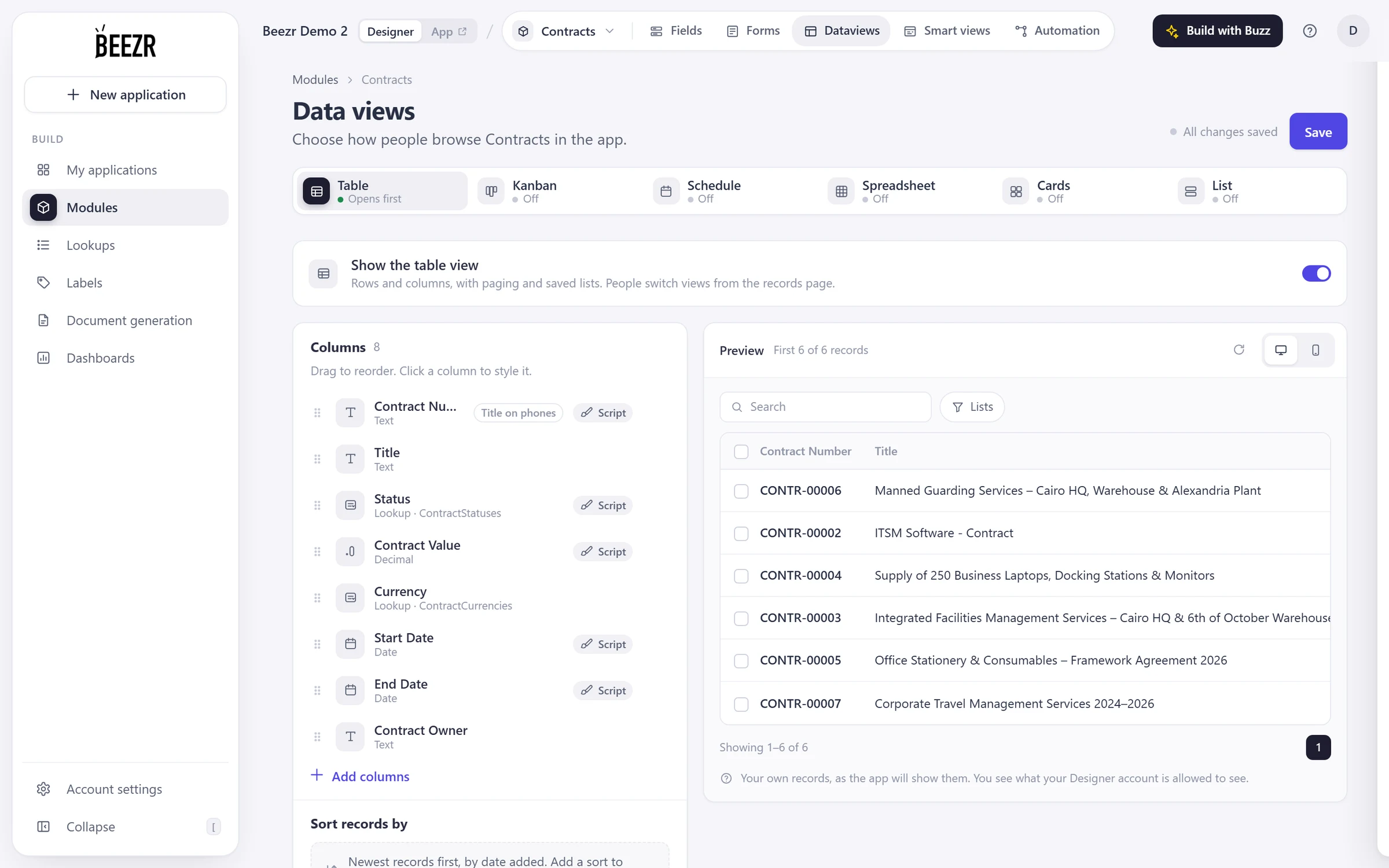
The application reaches its reviewers. Their decision starts the contract.
An approval step routes to configured reviewers.
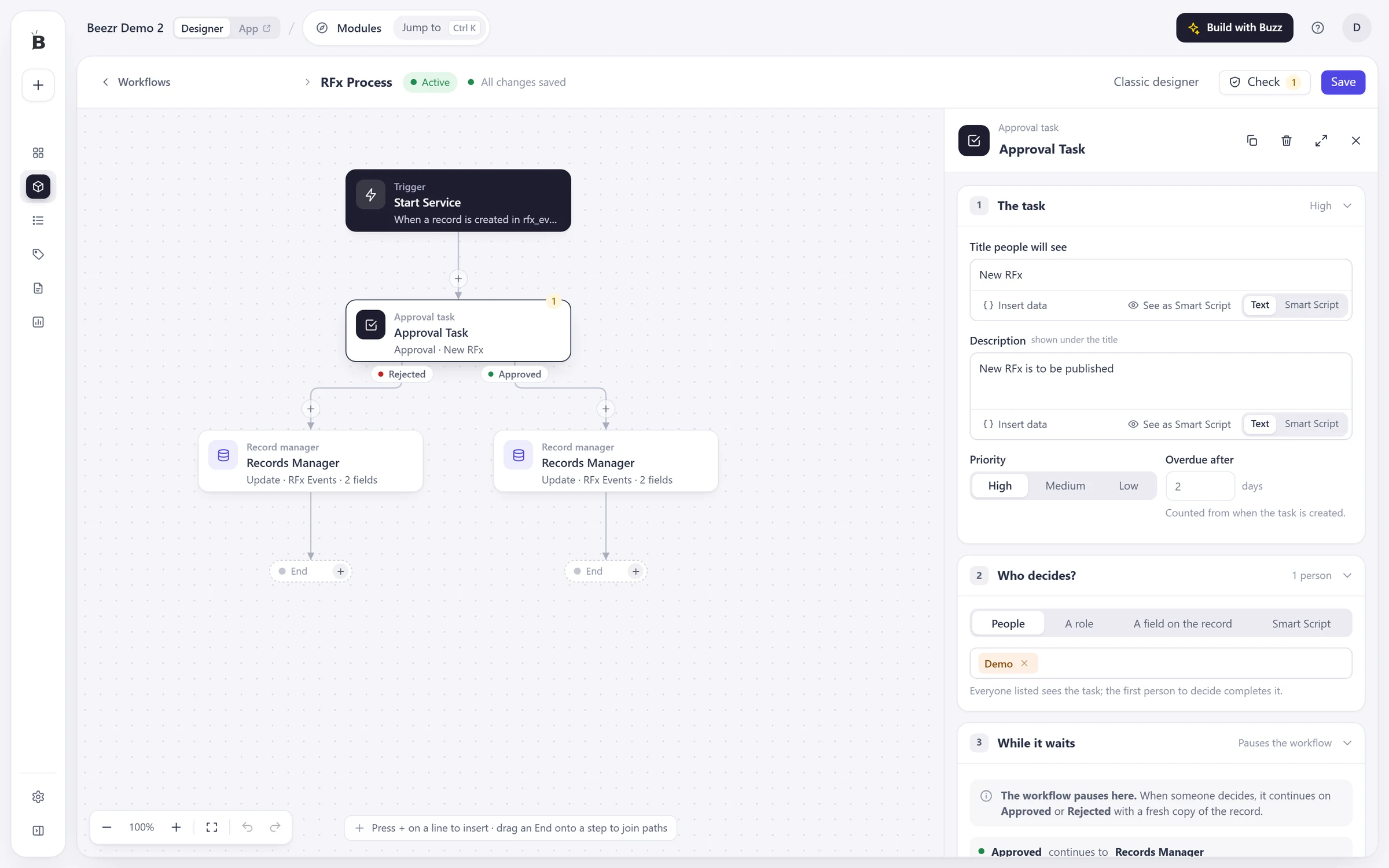
The instalment closes the balance at maturity. The calculation handles partial disbursements.
A custom function step calculates the schedule.
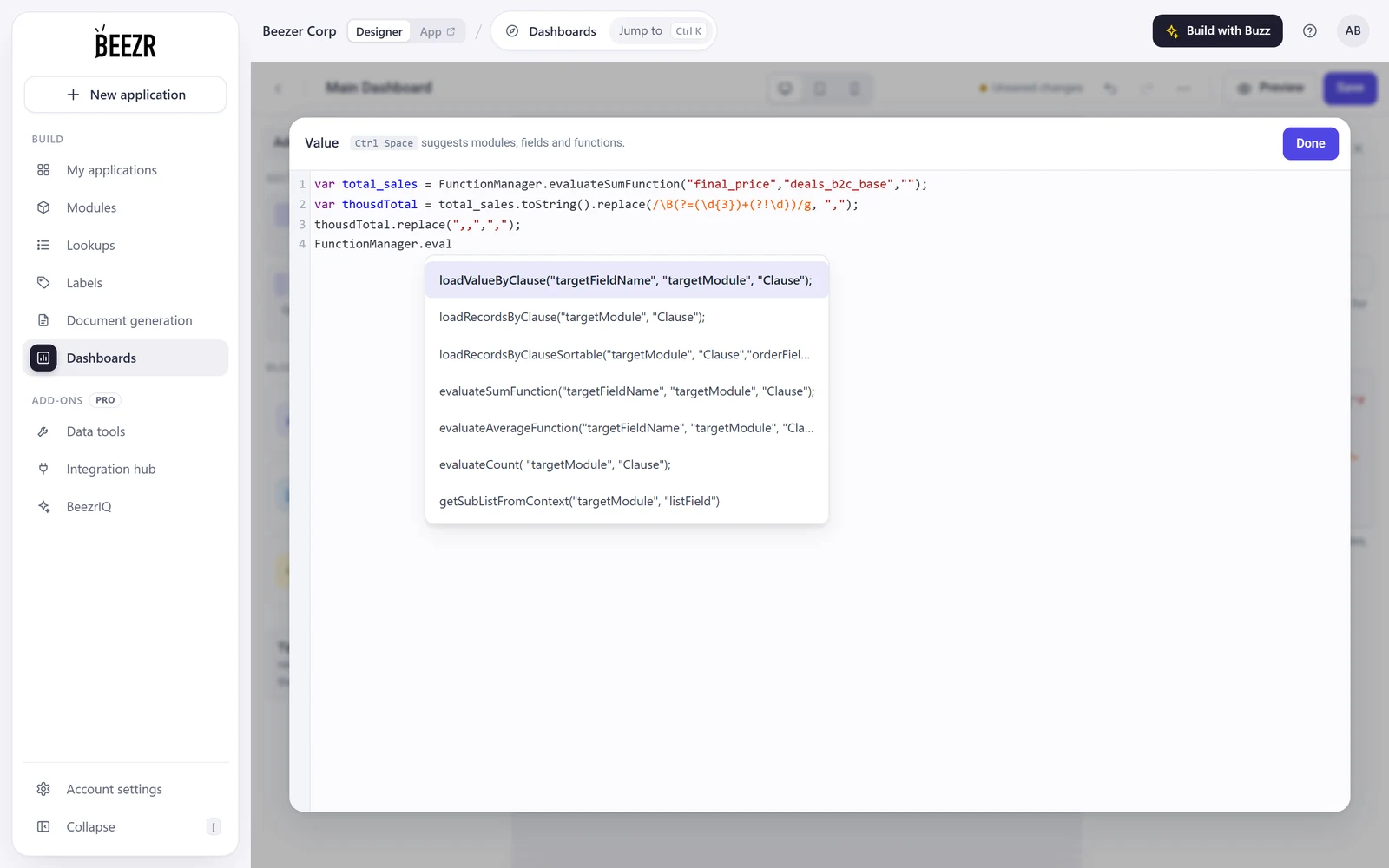
The customer requests more finance. The revised schedule retains its previous version.
The amendment calls the custom function step.
Your penalty rule applies. The ledger keeps charges and exceptions traceable.
Workflow rules write the contract's penalty ledger.
Elapsed periods determine the payoff. Your penalty rules apply before reconciliation and closure.
The settlement workflow calculates payoff and closes the contract.
The revised schedule stays with the contract.
| Before | With Beezr |
|---|---|
| Product rules live in separate models | Product terms run as configuration |
| Top-ups need an offline recalculation | Amendments recalculate within minutes |
| Late fees need a separate trail | Penalties have a dedicated ledger |
| Closure needs a side calculation | Settlement starts the reconciliation workflow |
We compare each option against your product rules.
| Question | Loan management system | Custom build | Beezr |
|---|---|---|---|
| Product terms | Within its product model | Built to your specification | Your terms as configuration |
| Schedule changes | Its amendment features | Your calculation | Custom function step |
| First process | System rollout | After development | Running in weeks |
| Changing a rule | Its configuration tools | Developer update | Change workflow settings |
| Connections | Available interfaces | Built interfaces | Integration Hub and REST steps |
We build lending from shared parts. Approvals meet contract history. The same records support reconciliation and recovery.
The Integration Hub connects accounting APIs through a REST step. A Web Agent reaches systems without an API.
Onboarding and KYC
Also runs in factoring.
Contracts and documents
Also runs in procurement.
Approvals
Also runs in payment requests.
Ledgers
Also runs in factoring.
Reconciliation
Also runs in invoice settlement.
Case management
Also runs in collections.
Your first process is running in weeks.
Yes. The next part connects to the same records.
Yes. Import Excel records into your forms and workflows.
Yes. Approval and document rules differ by department or entity.
Yes. Users choose Arabic or English, with right-to-left screens.
Yes. The Integration Hub sends messages through a provider or your company's WhatsApp Business account.
In your Beezr workspace, with field-level access and history. Beezr Shield adds encryption, SSO, MFA and geo fencing.
Compare your product terms and amendments with the lending system's model. We configure yours.
The custom function step recalculates the schedule. Previous versions remain traceable.
Import the statement. Transactions match by reference; exceptions reach a reviewer.