The customer agrees to pay.
The due date needs follow-up.
Finance operations
When a payment is missed, your lending system tells Beezr through its API and a case opens on its own. Agents log every call and promise, broken promises escalate by rule, and the outcome flows back to the lending system.
In use at a fintech lender in Egypt, with agency activity tracked against SLAs.

We find lending balances in one system, recovery work elsewhere. The next agent needs the previous agreement.
The due date needs follow-up.
Calls and visits must travel with it.
Managers need activity against the agreed SLA.
Case history must survive handoffs.
You keep the loan. We follow its recovery case.
Credit data arrives with the schedule. The trigger starts recovery.
REST steps read the lending system's APIs.
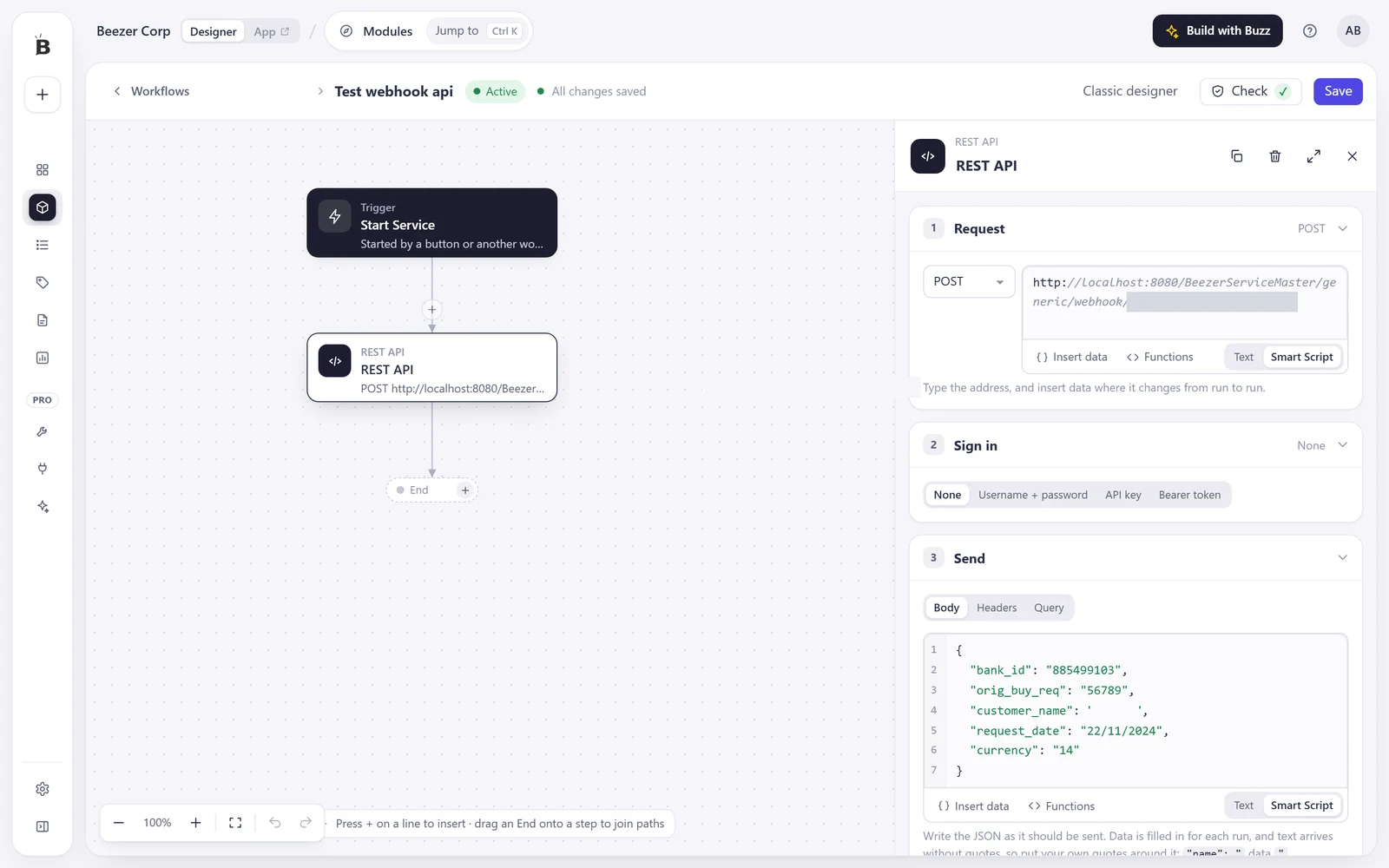
The missed payment opens a case. Assignment follows your routing rules.
Workflow rules create and assign the case.
The call stays on the case. Beezr monitors the promise's due date.
Case records hold promises; workflow reminders prompt follow-up.
An alert prompts follow-up. Repeated broken promises trigger your escalation path.
Workflow rules set escalation timing.
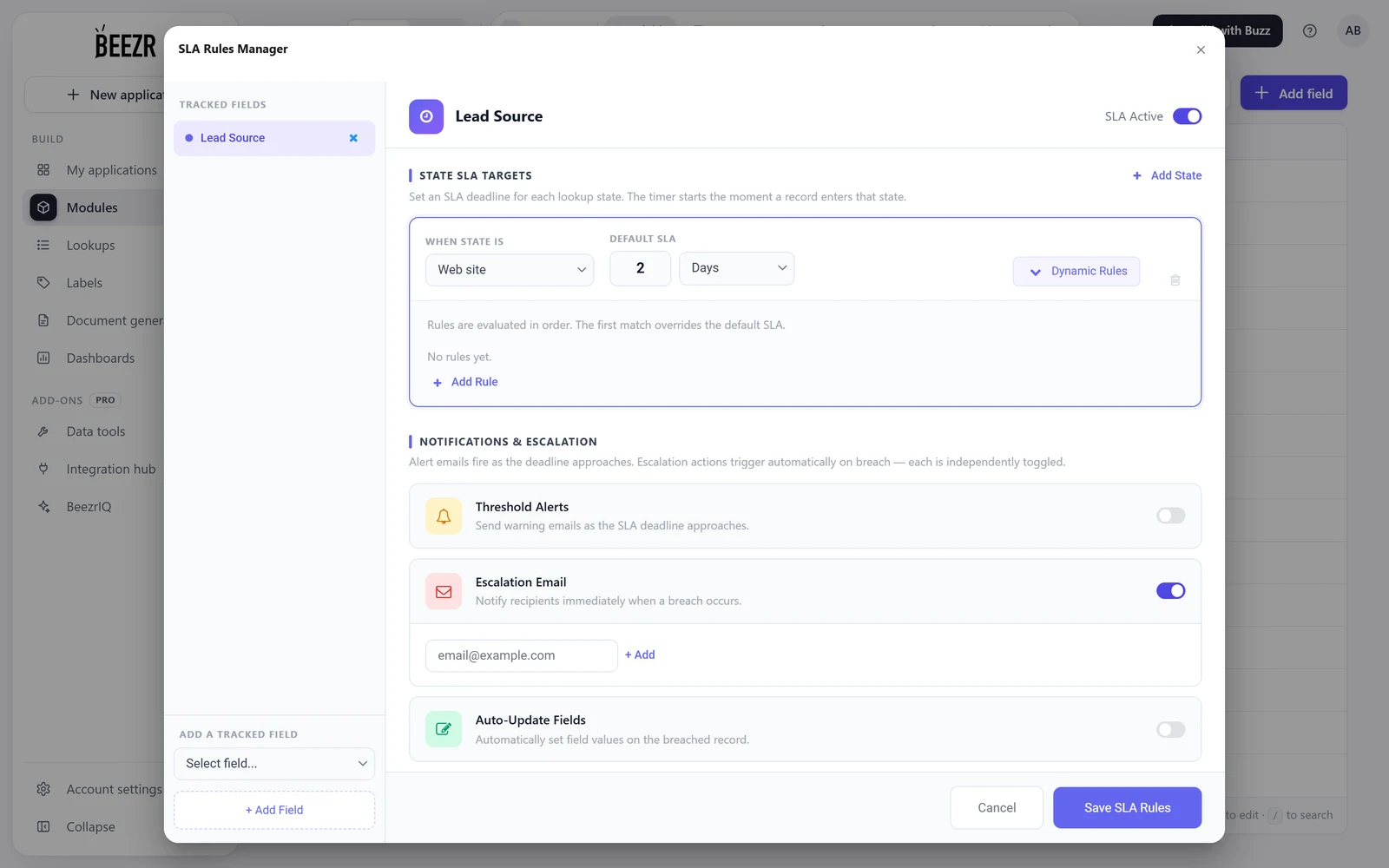
The agency uses its portal view. Actions are measured against its SLA.
Permissions restrict Beezr-hosted forms to assigned cases.
Legal receives a linked case history. Outcomes return through the lending system's APIs.
REST steps write back outcomes; linked records retain history.
Recovery history reaches the final outcome.
| Before | With Beezr |
|---|---|
| Promises sit outside the loan record | Due dates trigger monitored follow-ups |
| Handoffs lose the earlier interactions | The full case history travels |
| Agency work needs separate chasing | Activity is tracked against its SLA |
| Lending waits for a status update | Outcomes are written back through APIs |
We compare recovery and agency handoffs against your procedures.
| Question | Lending system's collections module | Custom build | Beezr |
|---|---|---|---|
| Recovery stages | Within its stage model | Your specified procedures | Your workflow rules |
| Agency access | Its agency features | Specified portal | Assigned-case access |
| First process | Lending-system rollout | After development | Running in weeks |
| Changing escalation | Its configuration tools | Developer update | Change workflow rules |
| Lending data | Within the lending system | Specified API connection | REST API steps |
We build collections from shared parts. Case management preserves history. Reminders and permissions keep agency work attached.
REST steps call lending APIs. The Integration Hub connects notifications. A Web Agent reaches systems without APIs.
Core-system sync
Also connects finance operations.
Case management
Also runs in customer support.
Follow-ups and reminders
Also runs in HR reviews.
External portals
Also runs in procurement.
Onboarding and KYC
Also runs in factoring.
Approvals
Also runs in payment requests.
Your first process is running in weeks.
Yes. The next part connects to the same records.
Yes. Import Excel records into your forms and workflows.
Yes. Approval and document rules differ by department or entity.
Yes. Users choose Arabic or English, with right-to-left screens.
Yes. The Integration Hub sends messages through a provider or your company's WhatsApp Business account.
In your Beezr workspace, with field-level access and history. Beezr Shield adds encryption, SSO, MFA and geo fencing.
Compare your recovery stages and agency handoffs with the module's features. We configure yours.
Yes. Agencies access assigned cases through Beezr-hosted forms. Actions are logged.
Beezr alerts your team. Repeated broken promises trigger your escalation rules.
Bring one team's cases. We build recovery with you, then connect agencies and lending.