Sales starts production
Retail and partner orders link to their product configurations. Each order triggers a production request with its bill of materials. Custom items carry design notes, instructions and the customer's reference data.
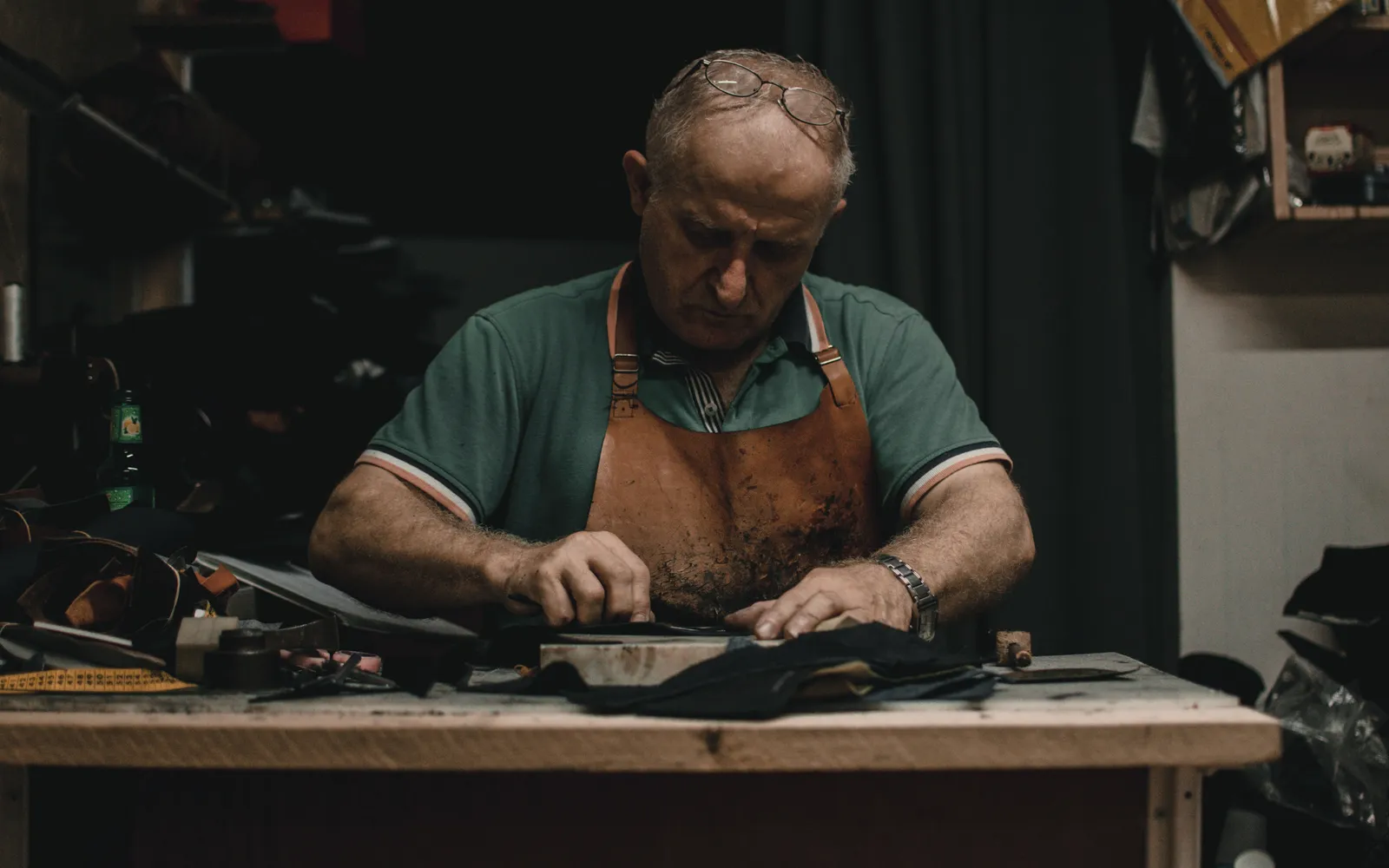
Custom leather-goods manufacturing
Every sales order in this workshop opens a production request in Beezr with its bill of materials. Materials, purchases and expenses stay tied to the job, so margin is visible per product and batch.
Sales, operations and procurement coordinated production through disconnected tools. Custom orders made the handover harder. Spreadsheets struggled to track each specification, while manual coordination delayed fulfilment.
Material consumption had no central record tied to production output. Stock discrepancies followed. Procurement requests went by email, so replenishment and delivery slipped. Management lacked a shared view of production and inventory.
The workshop had the order. It lacked a connected record of the work.
We started with the sales order and kept the production job attached.
Retail and partner orders link to their product configurations. Each order triggers a production request with its bill of materials. Custom items carry design notes, instructions and the customer's reference data.
Production activity deducts raw materials from stock in real time. Batches retain their item type, supplier and warehouse. Expired, overused and returned materials are recorded so their movements remain traceable.
Purchase orders are created against supplier profiles in Beezr. Each purchase is tied to the production job for cost attribution. Supplier balances retain transaction detail, alongside the purchase-order status procurement works with.
Expenses are recorded by category and linked to jobs. Cost tracking also covers product types and timeframes for margin analysis. Finance handles expense approvals and ledger updates, while operations manages production.
The cost follows the work that created it.
A custom order is recorded with its design instructions.
The job opens with its product configuration and required materials.
Material deductions update stock as production work is recorded.
Procurement sees availability, usage rates and reorder triggers on the dashboard.
A purchase order links the supplier to the production job.
Finance approves expenses and sees supplier balances by transaction.
Each team works on its part of the same job.
A sales order starts its corresponding production request.
Material usage is visible in real time, batch by batch.
Purchase orders and supplier balances are handled in the same application.
Direct and indirect production expenses are visible against the work.
New products and production workflows can be modelled through configuration.
Custom work has a record from sale through production.
Order to production · Inventory and stock movements · Batch tracking · Cost and expense tracking · Purchase orders · Supplier ledger
We connected the handovers around the production job.
Bring the handover you chase most: a production request or a material purchase. We can start with the job record your team already understands.